java.util.Currency getSymbol()
Description
This is equivalent to calling getSymbol(Locale.getDefault(Locale.Category.DISPLAY)). As a reference the getSymbol method is overloaded which means that this method has more than one method implementation but with different method signature. One of the overloaded method is a getSymbol() without a method argument which we currently discussing, meanwhile the other overloaded method takes an argument Locale.
Method Syntax
public String getSymbol()
Method Argument
| Data Type | Parameter | Description |
|---|---|---|
| N/A | N/A | N/A |
Method Returns
The getSymbol() method of Currency class returns the symbol of this currency for the default DISPLAY locale.
Compatibility
Java 1.4
Java Currency getSymbol() Example
Below is a simple java example on the usage of getSymbol() method of Currency class.
package com.javatutorialhq.java.examples;

import static java.lang.System.*;

import java.util.Currency;


/*
 * This example source code demonstrates the use of
 * getSymnbol() method of Currency class.
 */

public class CurrencyGetSymbolExample {

	public static void main(String[] args) {

		// create an instance of Currency class
		Currency currency = Currency.getInstance("JPY");
		// get the symbol for Japanese Yen
		out.println("Symbol of JPY in the current locale:" +
				currency.getSymbol());
	}
}
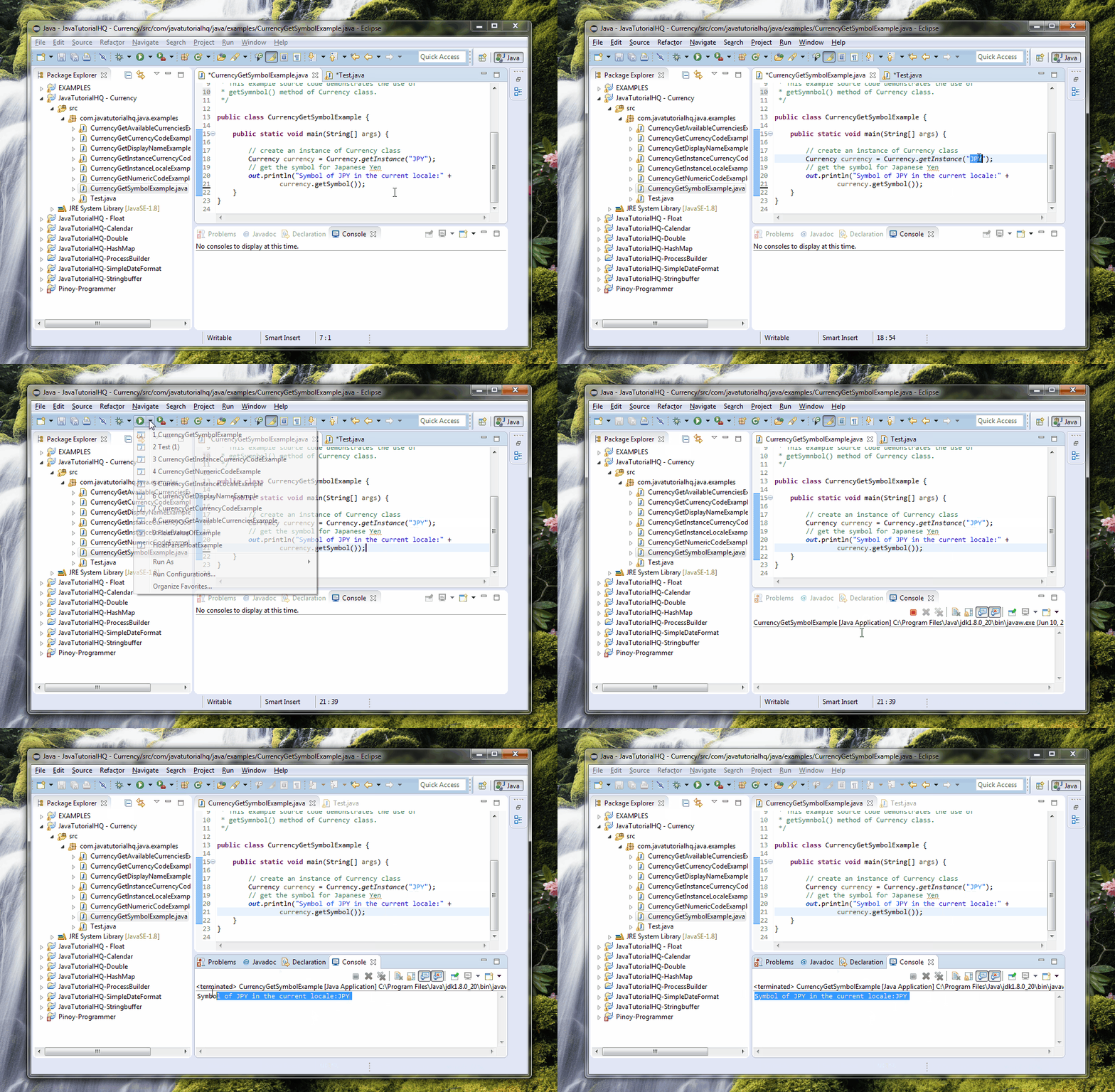
Basically on the above example, we just created a new Currency object with currency code of JPY with the intention of printing the currency symbol used for Japanese Yen using the getSymbol() method.
Sample Output
Below is the sample output when you run the above example.