java.io.BufferedOutputStream write(int b)
Description
On this document we will be showing a java example on how to use the write(int b) method of BufferedOutputStream Class. This method writes the specified byte to this buffered output stream.
Override by:
write in class FilterOutputStream
Throws:
- IOException – If an I/O error occurs
Method Syntax
public void write(int b)
throws IOException
Method Argument
| Data Type | Parameter | Description |
|---|---|---|
| int | b | the byte to be written. |
Method Returns
This method returns void.
Compatibility
Requires Java 1.0 and up
Java BufferedOutputStream write(int b) Example
Below is a java code demonstrates the use of write(int b) method of BufferedOutputStream class. The example presented might be simple however it shows the behaviour of the write(int b) method.
package com.javatutorialhq.java.examples;

import java.io.BufferedOutputStream;
import java.io.File;
import java.io.FileNotFoundException;
import java.io.FileOutputStream;
import java.io.IOException;
import java.util.Scanner;

/*
 * This example source code demonstrates the use of
 * write() method of BufferedOutputStream class
 */

public class BufferedOutputStreamWriteExample {

    public static void main(String[] args) {


        try {
            // initialize File object
            File f = new File("C:javatutorialhqoutputtest_out.txt");

            // instantiate a new FileOutputStream
            FileOutputStream fos = new FileOutputStream(f);

            // using the above FileOutputStream
            // instantiate a BufferedOutputStream object
            BufferedOutputStream buffOut = new BufferedOutputStream(fos);

            // initialize variables
            String writeString = "This is a test string";

            // convert above String to character array
            char[] value = writeString.toCharArray();

            // write the values of the character array
            for(char c:value){
                buffOut.write((int)c);
            }
            // close the BufferedOutputStream
            buffOut.flush();
            buffOut.close();

            // read the output file
            System.out.println("*****Contents of output file*****");
            Scanner s = new Scanner(f);
            while(s.hasNextLine()){
                System.out.println(s.nextLine());
            }
            s.close();

        } catch (FileNotFoundException e) {
            System.out.println("File path not found");
        } catch (IOException e) {
            System.out.println("IOException occured");
        }

    }

}
Sample Output
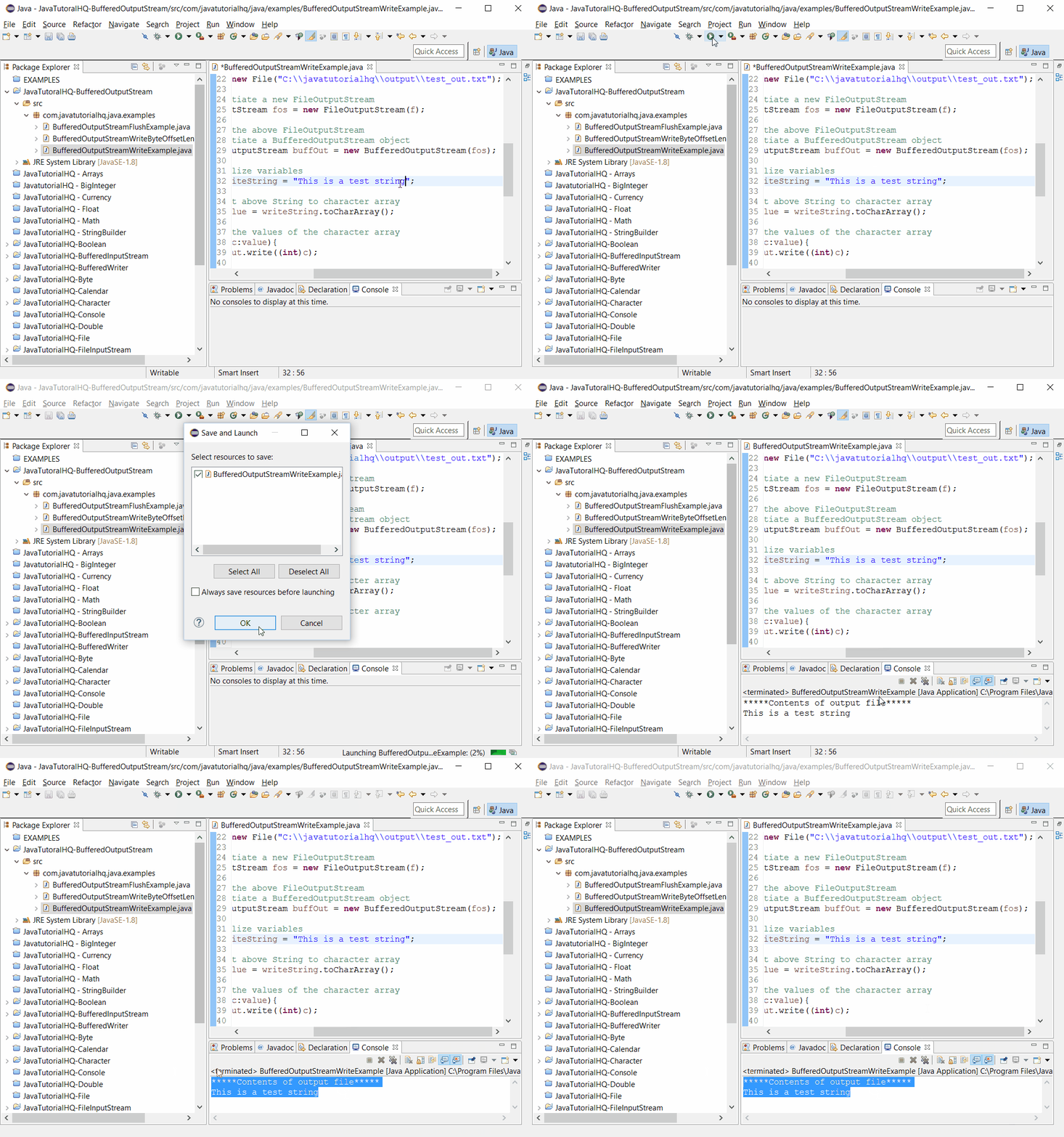
Below is the sample output when you run the above example.