java.lang.Character isSurrogate(char ch)
Description
A char value is a surrogate code unit if and only if it is either a low-surrogate code unit or a high-surrogate code unit.
The isSurrogate(char ch) method of Character class is static thus it should be accessed statically which means the we would be calling this method in this format:
Character.isSurrogate(char ch)
Non static method is usually called by just declaring method_name(argument) however in this case since the method is static, it should be called by appending the class name as suffix. We will be encountering a compilation problem if we call the java isSurrogate() method non statically.
Method Syntax
public static boolean isSurrogate(char ch)
Method Argument
| Data Type | Parameter | Description |
|---|---|---|
| char | ch | the char value to be tested. |
Method Returns
The isSurrogate(char ch) method of Character class returns true if the char value is between MIN_SURROGATE and MAX_SURROGATE inclusive; false otherwise.
Compatibility
Requires Java 1.7 and up
Java Character isSurrogate(char ch) Example
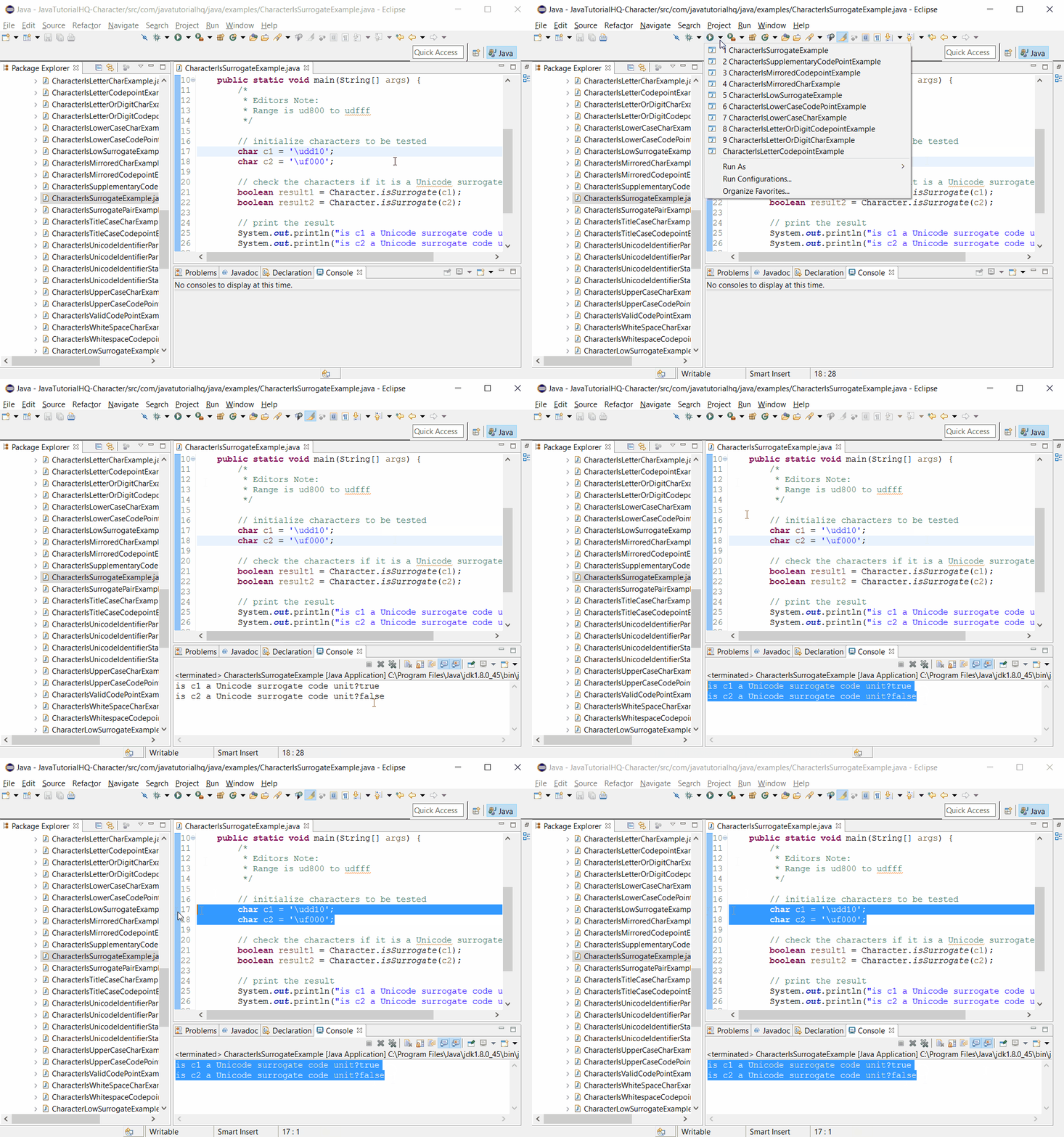
Below is a simple java example on the usage of isSurrogate(char ch) method of Character class.
package com.javatutorialhq.java.examples;

/*
 * This example source code demonstrates the use of
 * isSurrogate(char ch) method of Character class.
 */

public class CharacterIsSurrogateExample {

	public static void main(String[] args) {
		/*
		 * Editors Note:
		 * Range is ud800 to udfff
		 */

		// initialize characters to be tested
		char c1 = 'udd10';
		char c2 = 'uf000';

		// check the characters if it is a Unicode surrogate code unit
		boolean result1 = Character.isSurrogate(c1);
		boolean result2 = Character.isSurrogate(c2);

		// print the result
		System.out.println("is c1 a Unicode surrogate code unit?"+result1);
		System.out.println("is c2 a Unicode surrogate code unit?"+result2);


	}

}
Sample Output
Below is the sample output when you run the above example.